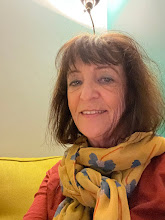
At the occasion of his latest exhibition at Arthur Roger Gallery, "R.I.P. Bruce A. Davenport, Jr./Artwork by Dapper Bruce Lafitte", the artist Dapper Bruce Lafitte gave an interview and offered his thoughts about his art, art in general and how he became an artist.
Could you describe your childhood? How did you find out that you had talent as a visual artist?
Any other artists in the family?
My aunt would draw on pieces of paper. I thought that everybody had talent, my thing was doing art, like Clementine Hunter.
Did you learn about art history? Did you visit art museums?
I would visit museums with my school, NOMA, CAC, the Ogden. I did attend the Summer program for kids living in the Projects at Xavier. I would go by John T. Scott mornings and evenings. One time I cut class and he said: "I will keep you out of trouble, sit down and look at me". He was making a sculpture. I was looking at him and I was thinking "there is a black man" and I looked up to him. He gave me the whole history of art. He would say "artists have a hard time, if you are an artist to make money, you are in the wrong game. You may become famous and then you might make some money"
Do you consider John T. Scott one of your mentors? Did you have a role model when you grew up?
Yes, he is one of my mentors, also Jeffrey Cook, Clementine Hunter, Bruce Price, Harry Jones, the co-owner of Stella Jones Gallery, Dan Cameron, David Cortez, Willie Birch. They are all have been big help in my career.
And now, do you visit museums and look at art?
No, I don't look at art. I might copy it if I like it or I just turn my back on it if I can't get it. I was looking at a Basquiat, David Cortez explained it to me and what he felt. Then I look at the art (Basquiat's), at his creativity and it gives me something.
About your creativity? Is it spontaneous?
Yes, it comes out. I made the marching bands, then I started to gravitate to other things and other things and then I go back doing the marching bands. It does not feel the same when I go back to it.
What are the "other things" you are doing?
The penitentiaries, the correctional system, because my people go through that. I talk about the school system because I got education from there. I talk about the Projects, my elders. I made maps of the city for my latest exhibition. I talk about the good side of the story and the bad side.
Your work is included in collections in Japan, Europe, you are represented by galleries in NYC, how do you relate to the New Orleans art scene?
It is a crab barrel! I will get up and the crab barrel tries to pull me down. But I remember when I first got into the business, I would go to galleries. On St Claude, the lady told me she liked my work and was interested in showing it. I said "Me?" She said "Yes". Then I learned the curator business, I learned the business aspect of art. That's how I started.
How do you get collectors abroad interested in your art which is mainly about New Orleans?
If they don't know New Orleans, I'll give it to them. The collector may be a rich white guy from Germany, he can't come to my hood, but I'll give it to him. He will feel the love. I always wanted to have people look at the art and see where it's coming from so we can relate to one another. Sometimes people can't relate, they don't have a soul. If you have a soul it shows in the work.
After hurricane Katrina, you started drawing school bands. How did you get interested in that subject?
The band directors lost their jobs after Katrina, they would invite me to their homes for dinner, and I started to draw the school bands. They were very appreciative that I brought their bands to the world. Also I watch football on TV and if the band sounds good, I go ahead. I drew LSU, Tulane, USC, University of Tennessee,...
You are visiting schools, making donations to the schools. Do you see yourself as a role model for the children in New Orleans?
I donated pictures of the marching bands to twenty five high schools in New Orleans, fifteen outside New Orleans. I have to give back to them. I love to talk to the children, they know me, like I was their big brother. I tell them my story, I listen to their stories.
Why the title of your latest exhibition at the Arthur Roger Gallery "R.I.P. Bruce A. Davenport, Jr."?
I was born Bruce D. Washington, my mother's maid name. Then my father came into my life when I was fourteen and gave me his last name, I became Davenport. I hated it. I became angered, depressed, ugly and mean. So I changed my name to Lafitte, the name of the housing project I grew up in.
Does it bother you to be called outsider or self-taught artist?
I don't care, but I rather not be categorized. I am an artist.
Do you throw away some of your work?
No, I just put it away, somebody might like it later.
Do you listen to music?
Yes, I like Beethoven, James Brown, Ray Charles, BB King, Public Enemy, I like when it makes you feel good. You go back and you listen and it becomes part of you. Sometimes I need quiet when I work because I am thinking, I am focused. Sometimes I need loud music, it gives me the groove.
What about the future?
In 2012, I almost quit doing art, but I was encouraged to continue and I am on for at least another ten years! I am working on it every day. I am trying to have six to seven shows outside New Orleans every year and three shows outside the country.
I am Bruce D. Lafitte, I am enjoying art, the creativity that is coming to me. I am enjoying the galleries and museums I am dealing with, I am enjoying my career. I am enjoying that people want my art and take it at different levels. I want to preserve the culture, bridge the gap from the old to the new, and be the in-between.
And the artist concluded with his famous "I see you lookin" scribbled throughout his works to remind the viewer that he is always present, watching.

photographs:
Dapper Bruce Lafitte
"R.I.P. Jeffrey Cook", 2017 (detail)